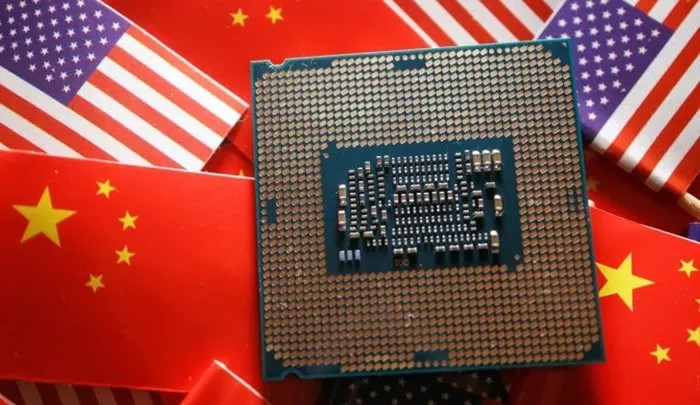
Washington is tightening control over the global flow of advanced artificial intelligence semiconductors, seeking to prevent high-end NVIDIA and AMD chips from reaching Chinese companies operating outside China.
The move reflects growing US concerns that existing export restrictions, first introduced in October 2022, have not fully limited China’s access to advanced computing power that could support military and strategic technologies. Those initial rules were intended to restrict Beijing’s ability to use advanced AI chips, but companies responded quickly by releasing modified, lower-performance versions that technically complied with US regulations.
By April 2025, Washington had tightened restrictions further, banning exports of these modified chips, including NVIDIA’s H20 and AMD’s MI308, which had previously been redesigned to meet earlier US regulatory standards. However, just a few months later, US authorities partially reversed the policy, allowing limited exports of the same chips under new conditions while requiring companies to remit 15% of the related revenue to the federal government.
The regulatory environment continued to evolve through the end of 2025. In November, the White House directed federal agencies to block sales of more miniaturized AI chips to Chinese companies, including certain derivatives of Nvidia’s B30 series. The move prompted chipmakers to further refine their designs to maintain access to the Chinese market while complying with US law. As of February 2026, exports of Nvidia’s more advanced H200 chips to China remained effectively frozen because of ongoing national security reviews.
Meanwhile, lawmakers are seeking a more direct role in export regulation. A bipartisan bill introduced in February 2026 would allow Congress to review and potentially block export licenses for advanced semiconductors to countries considered adversarial within a 30-day period. At the same time, the US Department of Commerce has been gradually expanding its Entity List, with plans to add dozens of organizations by 2025 to close regulatory gaps.
These increasingly strict controls are having ripple effects across industries where artificial intelligence and cryptocurrencies intersect. If restrictions on Chinese companies’ access to high-performance hardware through traditional channels tighten further, demand could grow for decentralized computing platforms such as Akash, Render, and io.net, which rely on distributed GPU resources. However, analysts warn that broad restrictions on advanced GPU supplies could push up global prices, putting pressure on the profits of cryptocurrency miners and computing service providers.
At the same time, China is accelerating the development of its own semiconductor ecosystem. Domestic initiatives, such as Huawei’s Ascend chip series, underscore Beijing’s determination to reduce its dependence on foreign technology. Analysts note that continued US restrictions could ultimately reinforce this trend, encouraging China to develop independent alternatives across the semiconductor supply chain.
The shifting policy landscape highlights the complex balance between national security priorities and global technology markets. As Washington continues to adjust its strategies, their long-term impact is likely to extend beyond traditional semiconductor trade, shaping the future of AI development, digital infrastructure, and the geopolitics of emerging technologies.