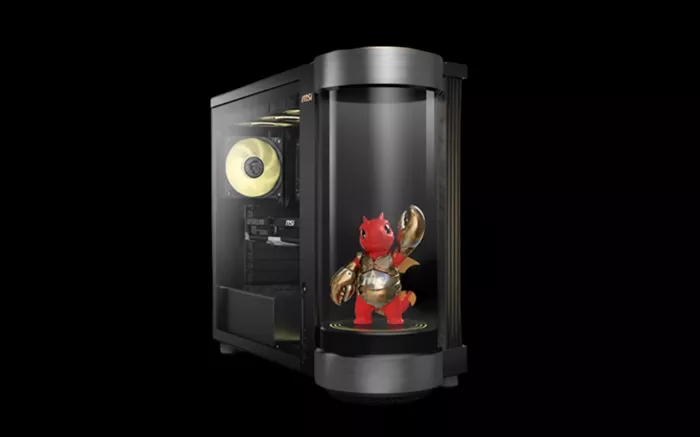
MSI has moved beyond the typical software-based approach to artificial intelligence by integrating it directly into the physical design of its latest gaming desktop, the MEG Vision X2 AI+. While the broader PC industry continues to add AI features to applications and operating systems, MSI’s latest creation stands out by giving AI a visible, interactive presence on the device itself.
At the heart of this concept is a secondary display built into the front of the PC case. Officially named AI Holostage, the cylindrical screen is more than a status panel: it serves as a dedicated interface for an AI assistant called LuckyClaw. The design reflects a shift toward making AI a central part of the user experience rather than merely a background tool.
LuckyClaw runs locally on the system, which may appeal to users concerned about latency, privacy, or dependence on cloud services. Through natural voice commands or text input, users can instruct the assistant to make a range of system adjustments. These include switching performance modes according to workload, adjusting monitor configurations, and customizing RGB lighting effects for connected components. By bringing these functions into a conversational interface, MSI effectively turns complex system management into a more intuitive, hands-free experience.
AI Holostage also adds a visual dimension to system interaction. Instead of navigating traditional menus or control panels, users interact with an animated avatar representing the assistant. Although LuckyClaw is the default character, MSI has opened the platform to third-party customization, allowing users to install alternative avatars. This flexibility points toward a broader ecosystem in which personalization and community-created content could play an increasingly important role over time.
Functionally, the system can be understood as voice control integrated into the hardware itself. Its implications, however, extend beyond convenience. By embedding AI into the PC’s physical form, MSI is experimenting with how users interact with their devices, potentially changing expectations around accessibility and interactivity. The company has indicated that the LuckyClaw software will receive ongoing updates, suggesting that its capabilities could eventually expand well beyond basic system control.
The launch comes as AI rapidly becomes a defining feature of consumer technology, from smartphones to productivity software. Yet much of this integration remains invisible, operating behind the scenes. MSI’s approach, by contrast, emphasizes visibility and presence, effectively giving AI a “face” and a fixed place within the hardware.
It remains unclear whether the concept will resonate with mainstream gamers or remain a niche innovation. Some users may see AI Holostage as a practical tool that simplifies system management, while others may view it as an experimental feature that adds novelty rather than necessity. Nevertheless, the MEG Vision X2 AI+ clearly represents an attempt to stand out in a crowded gaming PC market, where performance improvements alone are no longer enough to attract attention.
By combining high-end gaming hardware with a built-in AI interface, MSI is positioning the MEG Vision X2 AI+ as more than a desktop computer: it offers a glimpse of a future in which PCs combine computing power with intelligent, personalized interaction. As updates arrive and the ecosystem develops, the success of this approach may depend on how effectively MSI can turn its AI companion from a feature into an integral part of the gaming experience.