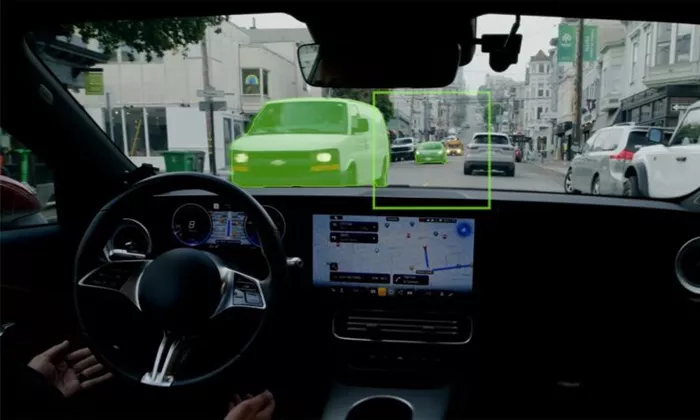
NVIDIA has unveiled Alpamayo 2 Super, its most powerful open artificial intelligence model to date, designed to accelerate the development of Level 4 autonomous vehicles such as robotaxis. The announcement, made at NVIDIA GTC Taipei, underscores a significant expansion of the company's autonomous vehicle technology platform, introducing new tools for simulation, training, and data generation aimed at simplifying the creation and testing of self-driving systems.
Alpamayo 2 Super is a vision-language-action (VLA) model with 32 billion parameters that combines perception, reasoning, and decision-making into a unified architecture. It is capable of analyzing complex road situations, planning actions, and operating across the entire autonomous driving stack. By providing reasoning traces, the model aims to enhance transparency and allow engineers to better understand how driving decisions are made.
According to NVIDIA founder and CEO Jensen Huang: "Alpamayo is the moment when cars begin to think safely, not just drive. Only NVIDIA is making models, simulations, real-world data, and agent skills open so that the global robotaxi ecosystem can develop Level 4 capabilities that understand edge cases, explain decisions, earn trust, and safely scale to millions of vehicles."
The new model represents a significant scale-up compared to previous versions, which contained around 10 billion parameters. This expansion enables improved understanding of 3D environments, more accurate trajectory prediction, and better response to rare or unusual road situations. Alpamayo 2 Super also includes full-surround perception, processing data from front, side, and rear sensors, and introduces "Meta-Actions" for higher-level driving decision prediction, such as yielding, lane changing, or stopping before executing vehicle control.
NVIDIA confirmed that Alpamayo 2 Super will be released as an open model, with inference code available on GitHub, and model weights planned for release on Hugging Face this year. Additionally, the company announced that its Chain-of-Causation automatic annotation pipeline, which automatically generates reasoning-based annotations from driving video recordings, will be made publicly available.
Alongside Alpamayo 2 Super, NVIDIA introduced AlpaGym — an open-source reinforcement learning-based closed-loop autonomous vehicle training framework, and OmniDreams — a generative world model that creates photorealistic driving environments. These tools are designed to help developers address rare scenarios and generate long-tail data for robust model training.
To further support development workflows, NVIDIA also introduced new physical AI agent skills, including Neural Reconstruction powered by NVIDIA Omniverse NuRec, which converts real fleet data into reusable 3D scenes for simulation and various sensor configurations. By combining these technologies, NVIDIA hopes to accelerate autonomous vehicle development while improving safety, efficiency, and scalability.