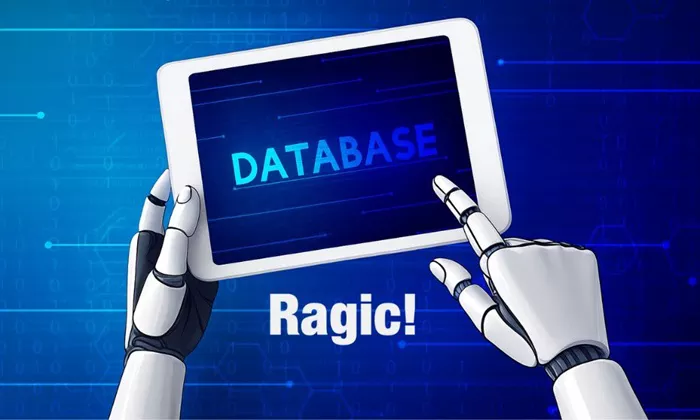
Ragic has announced the launch of its new Ragic AI Agent, a built-in artificial intelligence system designed to work directly inside users’ databases and automate repetitive business processes without external integrations, manual data transfers, or technical deployment.
Covina, California, May 28, 2026 — The company described the AI Agent as a new step toward making enterprise automation more accessible to organizations without in-house technical teams. Built within its no-code database environment, the system enables businesses to run AI processes on their existing operational data, eliminating the need for separate APIs, connectors, or third-party tools.
According to the company, the AI Agent operates natively inside the database, allowing it to read records, update forms, execute workflows, and apply business logic directly where the data resides. This structure is intended to reduce friction between AI decision-making and everyday operations, enabling insights to trigger follow-up tasks immediately without manual intervention.
Ragic CEO and founder Jeff Kuo said the goal is to simplify AI adoption in businesses by reducing both costs and technical complexity. He noted that many organizations struggle with fragmented AI tools or require lengthy customization cycles to achieve consistent results, while Ragic’s AI Agent is designed for quick setup and gradual refinement through natural language.
The system is built directly into a platform that resembles a spreadsheet interface, allowing users to create workflows through drag-and-drop configuration combined with prompt-based instructions. The company emphasizes that no coding or installation is required and that the AI Agent can be activated directly in a browser-based environment, making it accessible to operational teams in HR, finance, sales, and administrative departments.
Ragic also emphasized that the AI Agent is designed for organization-wide use rather than individual use cases. A single workflow configuration can be shared across teams, ensuring that the benefits of automation extend throughout the organization instead of being confined to personal assistants or isolated tools.
Security and governance were identified as key features of the system. The AI Agent operates within the user’s existing database permissions, accessing only data already authorized under role-based restrictions. Administrators can also define specific boundaries for each AI Agent, including permitted actions, to ensure compliance with internal governance standards. The company stated that enterprise security protocols are supported and that all operations remain within the user’s account environment.
By keeping its AI system fully integrated into its platform, Ragic aims to meet growing demand for practical AI tools that can be deployed without complex infrastructure. The company said this approach is intended to bridge the gap between AI capabilities and everyday business usability, particularly for small and midsize organizations seeking automation without additional engineering costs.