The government, public institutions, and companies of South Korea will gain access to advanced artificial intelligence models in cybersecurity as part of a new OpenAI initiative, marking an important step in the global expansion of defensive AI capabilities.
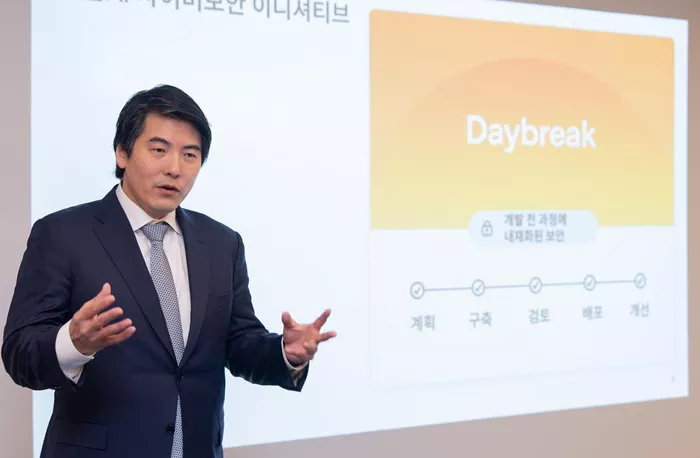
At a press conference in Seoul, OpenAI's Head of Strategy Jason Kwon stated that the company will include Korean stakeholders in its cybersecurity program, allowing vetted specialists to use the latest AI systems for vulnerability detection, defense enhancement, and critical infrastructure security. He emphasized that AI can play a transformative role in cybersecurity, accelerating threat detection and improving response efficiency, while positioning OpenAI as a long-term partner of South Korea.
A central aspect of the initiative is South Korea's participation in OpenAI's Daybreak program, which provides access through the Governmental Trusted Access for Cyber (GTAC) framework. This restricted-access category is designed for vetted cybersecurity experts, enabling them to deploy specialized AI models for testing and enhancing system resilience. The program will also be gradually expanded to private companies operating in key industries, reflecting the growing demand for advanced defensive tools across the broader economy.
According to OpenAI, the inclusion of South Korea represents one of the first such collaborations in Asia alongside Japan, with participating institutions gaining access to its high-performance GPT-5.5-Cyber cybersecurity model. The Korea Internet and Security Agency will oversee implementation at the national level, ensuring proper governance and operational control.
The agreement was confirmed following a meeting between Kwon and Vice Minister of Science and ICT Yoo Jae-myung, underscoring government support for integrating advanced AI into national cybersecurity strategies. In addition to South Korea and Japan, the GTAC program also includes the United States and Canada, indicating a growing coalition of countries seeking to strengthen cyber resilience through controlled AI access.
This move comes amid growing global concern about the misuse of powerful AI systems, including OpenAI's GPT-5.5 and competing models such as Mythos developed by Anthropic. These concerns have prompted major AI developers to create restricted-access initiatives, such as OpenAI's Daybreak and Anthropic's Project Glasswing, both aimed at ensuring that advanced capabilities are first placed in the hands of trusted defenders rather than malicious actors.
Kwon noted that OpenAI's approach is designed for broader access for qualified institutions compared to similar programs, with the goal of accelerating defensive readiness. He added that the initiative will continue to evolve, including future AI models such as GPT-5.6 and GPT-6, ensuring timely access for trusted cybersecurity specialists to the most advanced tools.
While negotiations continue with private companies in South Korea, specific partners have not yet been disclosed. OpenAI reiterated that the main goal is to democratize access to advanced defensive AI within a trusted framework, enabling governments, institutions, and enterprises to better protect digital infrastructure and citizens, as well as support long-term economic stability and growth.