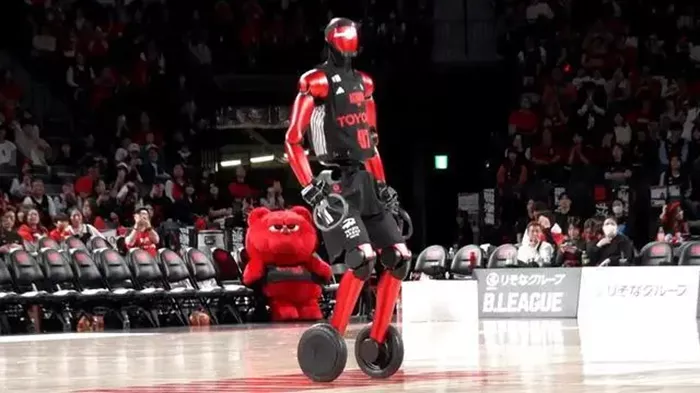
Toyota Motor Corporation unveiled the latest version of its basketball humanoid robot, CUE7, which made its debut at a home game for the Alvark Tokyo professional basketball team at the Toyota Stadium in Tokyo.
This demonstration highlighted Toyota’s ongoing efforts to combine artificial intelligence with robotics in highly dynamic real-world environments.
The CUE project was initially launched in 2017 by Toyota’s volunteer engineers with the goal of building an AI system from scratch. Since then, the robot series has developed rapidly, achieving significant milestones and demonstrating its technical precision and machine learning capabilities. In 2019, an early version of CUE set a Guinness World Record for the most consecutive free throws made by a humanoid robot, with 2020 successful shots. The project continued, and in 2024, CUE6 set another record, completing the longest shot by a humanoid robot at a distance of 24.55 meters.
CUE7 represents a significant leap forward in mobility and autonomy. Unlike previous robots that were essentially stationary, this new model can move freely on the court. It can dribble and perform movements remarkably similar to human basketball players, marking a shift in robotics technology from static demonstrations to dynamic interaction. Standing approximately 2.18 meters tall and weighing 74 kilograms, the robot wears a black uniform bearing the Toyota logo and maintains its balance using a two-wheeled base.
CUE7 is equipped with a series of cameras and sensors from its head to its wheels, enabling it to analyze its surroundings accurately in real time. This allows it to calculate the optimal force and trajectory needed for shooting and ball control. The system combines environmental perception with advanced motion control, enabling the robot to adapt increasingly precisely to the ever-changing environment on the court.
Industry experts point out that the development of CUE7 not only reflects advancements in robotics engineering but also foreshadows a broader prospect for AI-driven machines operating in complex physical environments. With an estimated price of approximately $150,000, this robot serves as both a technology demonstration platform and a potential platform for future applications beyond entertainment and sports.